Some people get a lot of things from their parents. Their eye color, or the shape of their nose, or a crushing, inexplicable loyalty to a terrible sports team, which must be genetic, because why would anyone choose this agony? (Even with the heartache, Go, Habs, Go!) We also inherit some far less obvious attributes, including genetic coding that makes everything else we do possible.
Within each of our cells—indeed, the cells of most organisms that have DNA—is a structure called mitochondria, which produces a substance called adenosine triphosphate (ATP), a vital component of the energy we need to stay alive. These tiny cell batteries have their own form of DNA, which is different from that found in cells’ nuclei. In nearly all animals, including humans, that mtDNA is inherited only from mothers. Why that’s the case has puzzled biologists, but new data could provide an answer, and lead to new treatments for some rare disorders.
While there are cases of humans having mtDNA from both parents, it’s extremely rare. In 2016, Ding Xue, a professor of molecular and developmental microbiology at the University of Colorado Boulder set out to find out why that is. He discovered a complicated process that causes paternal mitochondrial DNA to essentially destroy itself.
“It could be humiliating for a guy to hear, but it’s true,” Xue said in a statement. “Our stuff is so undesirable that evolution has designed multiple mechanisms to make sure it is cleared during reproduction.”
In the intervening years, Xue set out to learn what happens in the rare cases where that self-destruct sequence isn’t initiated, and paternal mitochondria is passed down to offspring. He chose to experiment on C. elegans, a tiny roundworm consisting of only around 1,000 cells, but still has some tissues in common with humans, such as a nervous system, gut, and muscles.
Describing the experiment in the journal Science Advances, Xue said the worms didn’t display any defects when it came to their sensory responses, but were affected in other ways, such as showing a reduced ability to remember or learn from negative stimuli. The altered worms were also less active in their movements.
None of this is particularly surprising. Around one in 5,000 humans are affected by a mitochondrial disease, and the symptoms can often include developmental delays, impaired cognition, muscle weakness, and poor growth. Previous experiments revealed that when mice were altered to have two different mtDNA sequences, there were a number of negative effects on their metabolism, activity level, and cognition.
What was surprising was that Xue and his colleagues were able to significantly reverse the effects, including returning ATP levels to normal. When they treated the worms with a form of vitamin K2, they found the worms’ learning and memory performance “significantly improved.”
Xue’s paper not only explained the benefits of inheriting mitochondria from a single parent—since adding a second parent’s mitochondrial DNA can lead to adverse effects—but also may have laid the groundwork for future treatments of mitochondrial disorders. He said it’s possible that delays in eliminating paternal mtDNA could be what leads to the disorders occurring in humans. “If you have a problem with ATP it can impact every stage of the human life cycle,” he said.
Roundworms are simple creatures, and it’s unlikely that simply giving humans with mitochondrial disorders vitamin K2 will fully cure their conditions. But the disorders can be hereditary, and Xue said that, while much more research needs to be done, it’s possible that giving vitamin K2 to mothers with a family history of the disease could lessen the chances of passing them on to their kids.
There’s still no hope for a cure for the annual disappointment of missing the playoffs. Thanks, dad.
Trending Products

LG UltraGear QHD 27-Inch Gaming Monitor 27GL83A-B – IPS 1ms (GtG), with HDR 10 Compatibility, NVIDIA G-SYNC, and AMD FreeSync, 144Hz, Black


Acer Nitro 27″ WQHD 2560 x 1440 PC Gaming IPS Monitor | AMD FreeSync Premium Up to 180Hz Refresh 0.5ms DCI-P3 95% 1 Display Port 1.2 & 2 HDMI 2.0 XV271U M3bmiiprx,Black


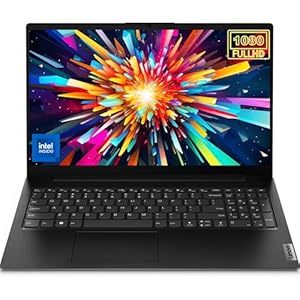
Lenovo 15.6″ FHD Laptop, Intel Pentium N6000 Quad-core Processor, 16GB Memory, 1TB SSD Storage, Ethernet Port, HDMI, USB-C, WiFi & Bluetooth, Windows 11 Home, WOWPC USB Bundle